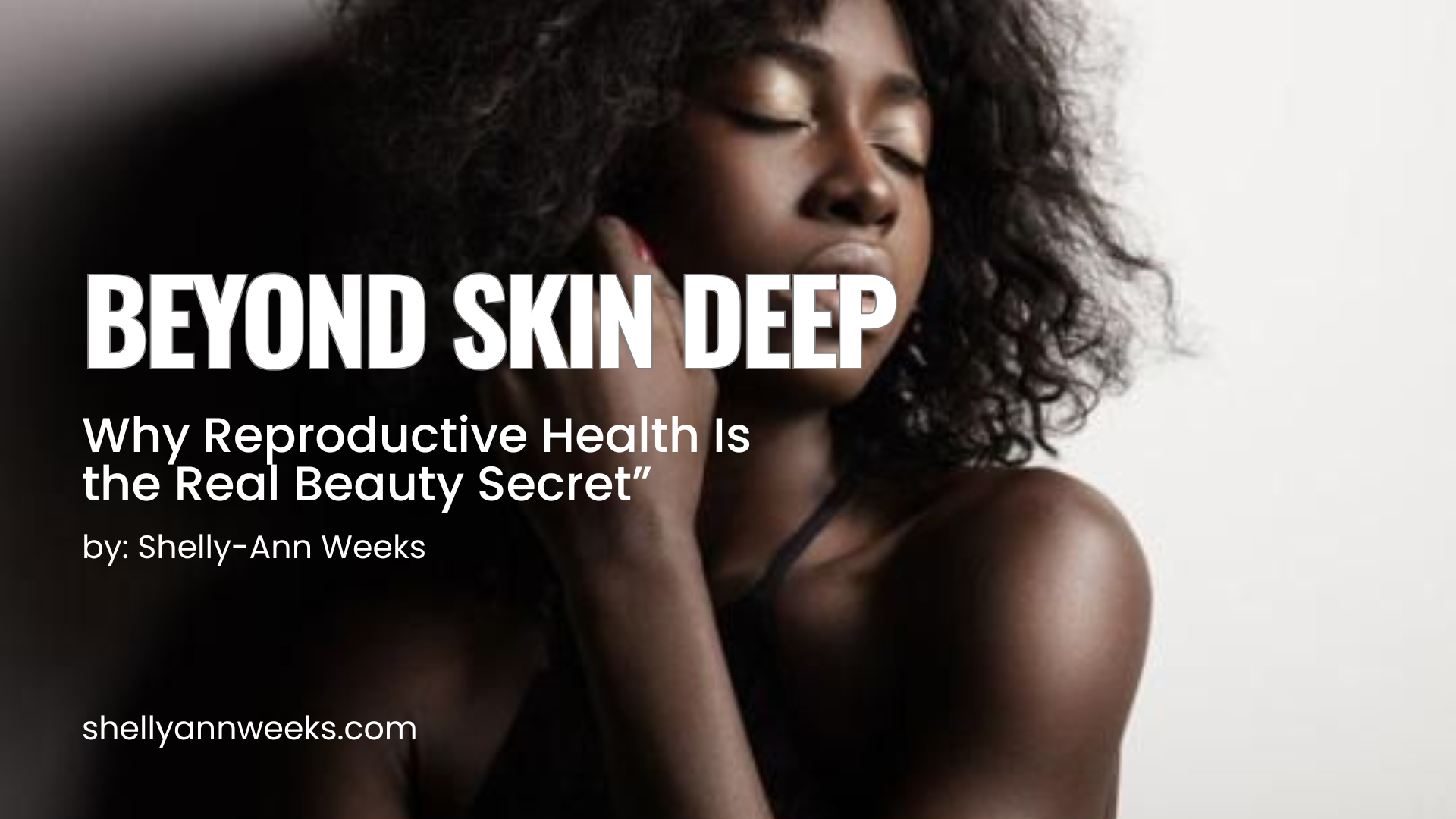
“Beauty is not something we apply. Beauty is something our bodies produce.”
The beauty industry has spent decades convincing us that confidence can be found in a bottle.
The next serum. The latest foundation. A miracle cream promising brighter skin, fewer wrinkles, or a more youthful glow.
There is nothing inherently wrong with enjoying beauty products. Makeup is an art form. Skincare can be an act of self-care. Looking after our appearance often helps us feel more confident.
But somewhere along the way, we began treating beauty as something we create on the outside instead of something our bodies generate from within.
What if the healthiest glow has less to do with the products on your bathroom shelf and more to do with the hormones flowing through your body?
What if the conversation about beauty has been incomplete all along?
Looking Beyond the Mirror
When people hear the words reproductive health, they often think about pregnancy, fertility, contraception, or menstruation.
Few realise that our reproductive system is also one of the body’s most powerful regulators of overall health.
The hormones produced by this system influence far more than our ability to have children. They shape our skin, hair, sleep, metabolism, mood, energy, concentration, emotional wellbeing, and confidence.
Estrogen supports collagen production, helping our skin maintain its elasticity and natural radiance. It contributes to healthy circulation, giving many women the unmistakable “glow” they experience during certain phases of their menstrual cycle.
Progesterone influences mood, sleep, and emotional balance, while testosterone—present in women in smaller amounts—supports strength, motivation, and energy.
When these hormones work together, the effects are often visible.
When they become imbalanced, our bodies communicate just as clearly.
Sometimes through persistent acne.
Sometimes through hair thinning.
Sometimes through unexplained fatigue.
Sometimes through mood changes, irregular periods, or chronic pain.
These aren’t simply inconveniences.
They are messages.
Your Skin Is Speaking
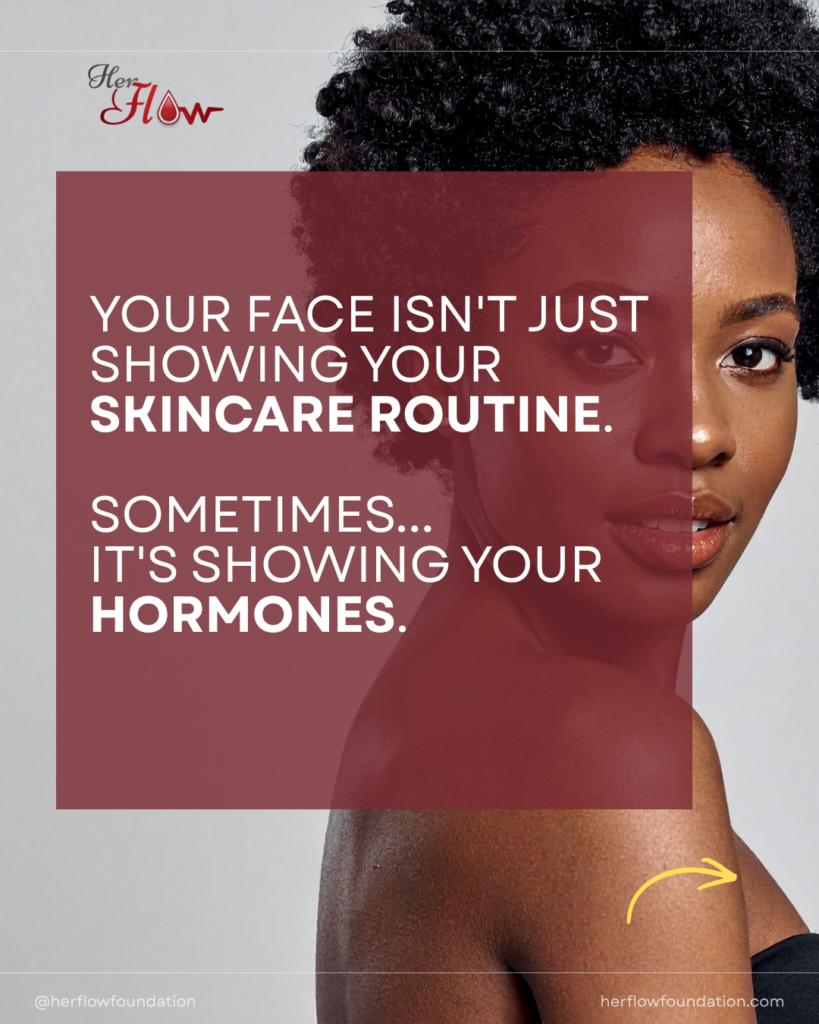
As a reproductive health advocate, one of the most common misconceptions I encounter is the belief that every beauty concern requires another beauty product.
A breakout appears.
We buy another cleanser.
Our skin looks dull.
We purchase another serum.
Our hair begins thinning.
We search for another treatment.
Yet we rarely stop to ask the most important question:
Why is this happening?
Our skin is not isolated from the rest of the body.
It reflects inflammation.
Stress.
Nutrition.
Sleep.
Hormonal fluctuations.
Even emotional wellbeing.
Sometimes what appears to be a cosmetic issue is actually a health issue asking to be acknowledged.
Your skin may be revealing what your hormones have been trying to tell you for months.
Your Menstrual Cycle Is a Monthly Wellness Report
One of the most remarkable aspects of reproductive health is that women receive a built-in health report every month.
The menstrual cycle isn’t random.
It is a sophisticated hormonal rhythm.
During menstruation, hormone levels are naturally low, and many women experience lower energy and an increased need for rest.
As estrogen rises during the follicular phase, skin often becomes clearer, energy improves, and confidence returns.
Around ovulation, many women feel their most vibrant. Skin may appear brighter, mood lifts, and social confidence increases.
Then comes the luteal phase, where progesterone prepares the body for pregnancy or another menstrual cycle. When balanced, it promotes calm. When disrupted, it may contribute to bloating, breakouts, mood changes, or fatigue.
This isn’t coincidence.
It’s biology.
When we understand these rhythms, we stop judging ourselves for changing throughout the month and begin supporting our bodies through those changes instead.
The Cost of Ignoring the Signals
Too often, society teaches women to normalise discomfort.
Painful periods?
That’s just part of being a woman.
Heavy bleeding?
You’ll manage.
Debilitating fatigue?
Push through.
But pain is not a personality trait.
Neither is exhaustion.
Conditions such as polycystic ovary syndrome (PCOS), fibroids, and endometriosis affect millions of women worldwide. Yet many spend years waiting for a diagnosis because symptoms are minimised or misunderstood.
The consequences extend far beyond reproductive health.
These conditions affect education, employment, relationships, mental health, and quality of life.
Ignoring these signals doesn’t make them disappear.
It simply delays the support people deserve.
Beauty Requires Dignity
Through my work with HerFlow Foundation, I’ve met girls who miss school because they don’t have menstrual products.
I’ve spoken with women who quietly fear bleeding through their clothes at work.
I’ve listened to young people who believe pain is something they must simply endure because no one has ever told them otherwise.
These experiences have shaped one of my deepest convictions:
You cannot feel beautiful when you do not feel safe in your own body.
Beauty without dignity is incomplete.
Confidence cannot flourish where shame, pain, or fear exist.
If we want healthier communities, we must ensure that menstrual health, reproductive healthcare, education, and access are recognised as essential—not optional.
Redefining Beauty
Perhaps it’s time to redefine what beauty means.
Beauty isn’t perfection.
It isn’t flawless skin.
It isn’t the absence of wrinkles.
Beauty is a body that is nourished.
A body that is understood.
A body that is supported rather than silenced.
This doesn’t mean abandoning skincare or cosmetics. It means recognising that the most effective beauty routine begins long before we stand in front of the mirror.
It begins with sleep.
Nutrition.
Movement.
Stress management.
Preventive healthcare.
Listening to pain instead of dismissing it.
Understanding our menstrual cycles instead of fearing them.
Honouring our reproductive health as an essential part of overall wellbeing.
The Real Beauty Secret
Imagine if beauty conversations included hormones alongside hydration.
Imagine if salons and spas encouraged discussions about menstrual health.
Imagine if healthcare, wellness, and beauty industries worked together instead of operating in separate worlds.
That future is possible.
Because beauty has never been just about appearance.
It has always been about health.
The glow we admire isn’t created by a filter.
It’s produced by a body that is functioning well, cared for with intention, and treated with dignity.
Our bodies are not working against us.
They are communicating with us.
The real beauty secret isn’t hidden inside a cosmetic bottle.
It’s found in learning to listen.
On a Personal Note
This article is the first in my Beyond Skin Deep series, where I’ll be exploring the powerful connections between reproductive health, confidence, wellbeing, and the lives we lead every day.
Because when we understand our bodies, we don’t just look better.
We feel better.
We live better.
About the Author
Shelly-Ann Weeks is a Sexual & Reproductive Health Educator, award-winning activist, and Executive Director of HerFlow Foundation. Through advocacy, education, and community engagement, she works to ensure that women and girls can manage their reproductive health with dignity, confidence, and access to the resources they need. Follow @shellyannweeks and @herflowfoundation for more conversations that challenge stigma and empower change.